


Lizzy Borden Case—Intro—Crime Scene—Autopsy
- Jun 1, 2016
- 4 min read
The story of the Lizzie Borden case remains one of the most infamous and debated murder mysteries in American history. On a sweltering summer morning in 1892, a quiet home in Fall River, Massachusetts, became the center of a brutal double homicide that would captivate newspapers across the nation. The accused was a 32-year-old Sunday school teacher named Lizzie Andrew Borden. The victims were her father and stepmother. More than a century later, the question lingers: did Lizzie really do it?
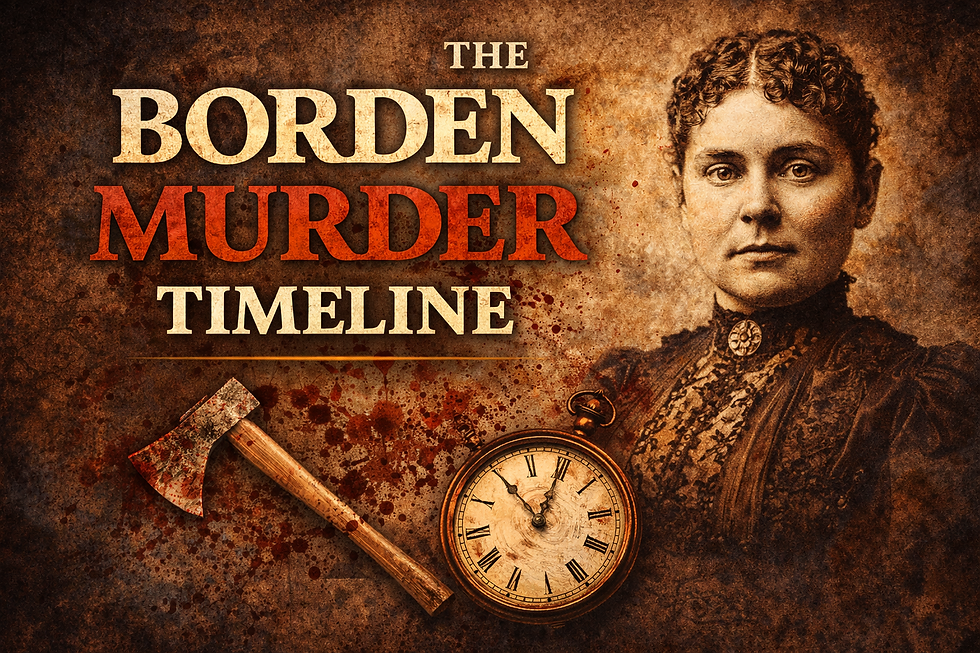
Lizzie Borden was born in 1860 to Andrew and Sarah Borden. After Sarah’s death, Andrew remarried Abby Durfee Gray. The blended family dynamic was reportedly strained. Andrew Borden was wealthy but notoriously frugal, and tension simmered within the household, particularly between the daughters and their stepmother. By the early 1890s, disagreements over property and money had intensified, creating a volatile domestic atmosphere.
The timeline of August 4, 1892, begins early. Andrew Borden left the house around 9:00 a.m. for his usual business errands in downtown Fall River. Abby Borden was at home, tidying guest rooms. Lizzie and the family maid, Bridget “Maggie” Sullivan, were also in the house. According to testimony, Lizzie claimed she had been in the barn looking for fishing sinkers during part of the morning.
At approximately 9:30 a.m., Abby Borden was attacked in an upstairs guest bedroom. She was struck repeatedly with a hatchet, suffering devastating blows to the side and back of her head. Her body was discovered face down on the floor beside the bed. The assault was swift and vicious, suggesting the killer acted with determination and close proximity.
Andrew Borden returned home around 10:45 a.m. Lizzie let him inside and claimed her stepmother had received a note to visit a sick friend. Bridget Sullivan later testified that she went upstairs to rest after helping Andrew settle on the sitting room sofa. Within minutes, Andrew Borden was attacked while lying down. He sustained multiple blows to the face, his features so damaged that he was almost unrecognizable.
At about 11:10 a.m., Lizzie called out that her father had been killed. Neighbors rushed in. Shortly after, Abby’s body was discovered upstairs. The gruesome nature of the murders shocked even seasoned law enforcement officers. Blood spatter patterns and the confined interior suggested the killer had been inside the home.
The first autopsy was performed on Andrew Borden. Conducted in the dining room of the house, physicians documented approximately ten or eleven hatchet wounds to his head and face. The medical examiners noted that one eye had been split cleanly in two. His injuries indicated he had likely been asleep or resting when the attack began.
A separate autopsy was conducted on Abby Borden. She had sustained roughly eighteen or nineteen blows to the head. Medical examiners observed that her wounds suggested she had been facing her attacker, at least initially, before collapsing. Based on body temperature and blood coagulation, doctors estimated she had died earlier than Andrew—approximately 90 minutes before his murder.
Following the initial examinations, both victims’ stomach contents were analyzed because physicians initially suspected poisoning. Andrew and Abby had reportedly experienced vomiting in the days prior. However, chemical tests revealed no significant traces of poison, and investigators shifted their focus back to the hatchet attacks as the primary cause of death.
In the days after the murders, suspicion increasingly fell on Lizzie. A hatchet head was discovered in the basement, and witnesses reported that Lizzie had attempted to purchase prussic acid shortly before the killings, allegedly for cleaning a sealskin cape. Though the pharmacist refused her request, the testimony fueled suspicion about possible premeditation.
Lizzie was arrested on August 11, 1892. Her trial began in June 1893 and quickly became a national spectacle. Newspapers sensationalized every detail, from Lizzie’s demeanor in court to the graphic descriptions of the autopsies. Public opinion was sharply divided—some viewed her as a cold-blooded killer, while others believed a respectable woman of her standing could not have committed such violence.
During the trial, the prosecution argued that Lizzie had motive, opportunity, and means. They highlighted the strained family relationships and potential financial gain. However, the defense countered that the investigation had been sloppy and that no direct evidence placed the weapon in Lizzie’s hands. Blood evidence was inconclusive by modern standards, and no eyewitnesses saw her commit the crimes.
After deliberating for just over an hour on June 20, 1893, the jury acquitted Lizzie Borden. The verdict stunned many observers. Despite her acquittal, suspicion never fully left her. She remained in Fall River for the rest of her life, ostracized by much of society, living in relative comfort until her death in 1927.
The Borden house itself became a grim landmark in American crime history. Over time, it transformed into a symbol of Victorian-era violence and mystery. Today, it operates as a museum and bed-and-breakfast, attracting true crime enthusiasts and paranormal investigators alike.

The Lizzie Borden case endures because it sits at the intersection of brutality and uncertainty. The timeline is clear, the autopsies documented the horrific details, yet the identity of the killer remains legally unresolved. Whether Lizzie was wrongfully accused or cleverly escaped conviction continues to spark debate, ensuring that the case remains one of America’s most haunting historical mysteries.


Comments