


May 4, 1865 - Lincoln is buried in Springfield, Illinois
Updated: Feb 26
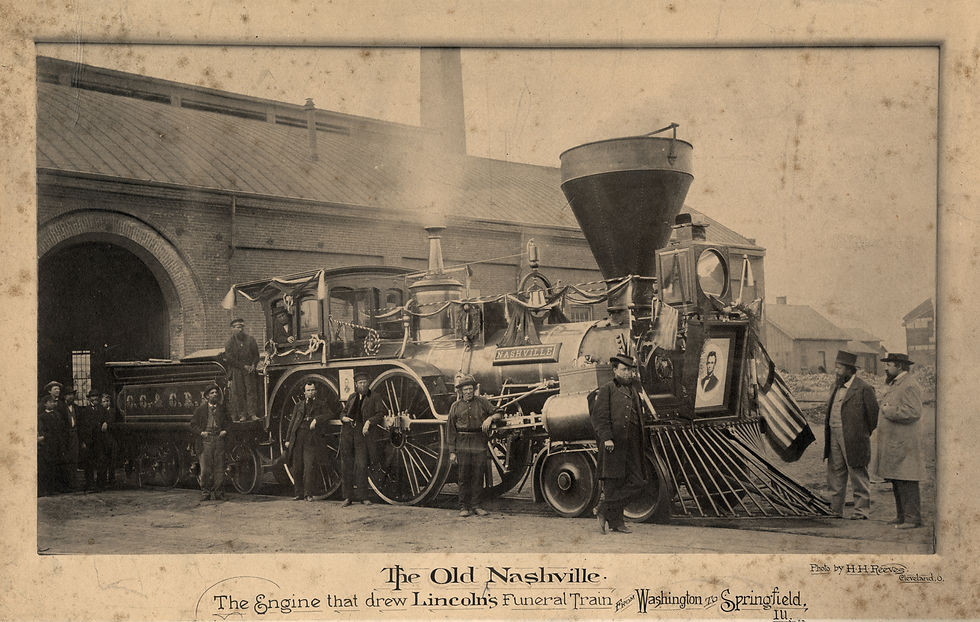
funeral choirOn May 4, 1865, President Lincoln was laid to rest in Springfield, Illinois. His train would take him on a ~1,700-mile journey from Washington, D.C. To Springfield.

His funeral train had traveled through 180 cities and seven states before reaching Springfield. Mourners honored the assassinated Lincoln at each stop. Lincoln’s son Willie, who died at age 11 from typhoid fever in 1862 and had originally been buried in Washington while Lincoln was serving as president, was interred next to his father in the family plot that same day.
The funeral of President Lincoln was one of the largest and longest processions our country has ever known. Reaching from the White House to his final resting place, it was almost 1700 miles, and it took days.

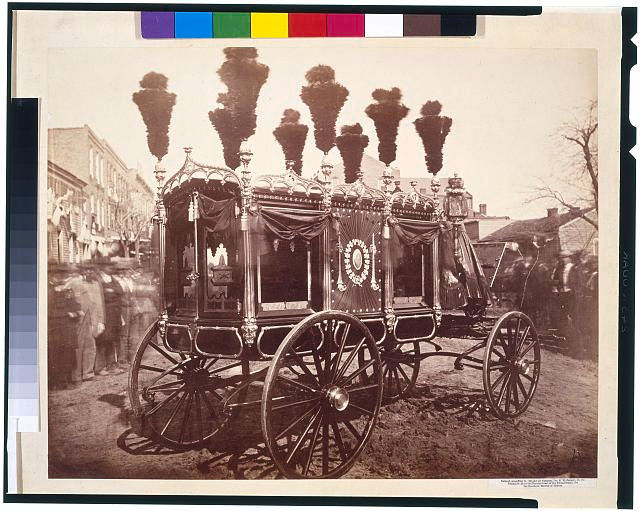
On the day of his funeral, the procession from the capital building itself was only 2 1/4 miles, but it took over 2 hours from the time they stepped off.
From end to end, the procession was some two miles long. On a hot day—the temperature reportedly reached 82 degrees—it was also too much for some participants. Among those reportedly affected by sunstroke was Mayor Dennis.
Some people found vantage points where they could watch the march. Katherine Ramstetter, interviewed by her granddaughter Catherine Baum in the early 1920s, remembered viewing Lincoln’s remains in the Capitol. The next day, however, she chose to watch rather than walk in the procession.

At 1 p.m.: The first elements of the procession reach Oak Ridge Cemetery. President Lincoln’s casket was to be housed temporarily in the receiving vault, a vault built into the side of a hill that had been designed for just that purpose: to hold a person’s remains until a permanent tomb could be dug or constructed. The vault, built in the early 1860s, previously had housed the remains of only two people; it was never used again for its original purpose. (The body of Willie Lincoln, Abraham and Mary’s third son who had died in Washington and was also returned to Springfield on the funeral train, had been moved into the vault prior to President Lincoln’s funeral.)
The funeral ceremony was held at the vault. Two stands were built, one east of the vault to hold speakers and one on the west designed to accommodate the choir, a 130-person male chorus from St. Louis accompanied by a brass band. (Most photos and drawings of the ceremony, done facing the vault and the hill, show the speakers’ platform on the left and the choir platform on the right.)
The ceremony apparently began before the rear elements of the procession reached the cemetery because it was finished by about 3 p.m.

The program from the ceremony was:
Remains placed in vault
“Dead March from "Saul"—choir
Opening prayer – Rev. Albert Hale of Springfield
“Farewell, Father, Friend and Guardian,” composed for the funeral—choir
Scripture reading (from Book of Job)—Rev. N.W. Miner of Springfield
“To Thee O Lord” – choir
Reading of Lincoln’s Second Inaugural Address—Rev. A.C. Hubbard of Springfield
“As When Thy Cross Was Bleeding”—choir"
Eulogy – Methodist Bishop Matthew Simpson of Evanston
Prayer – Rev. S.W. Harkey of Springfield
“Funeral Hymn” and Doxology – choir
Benediction – Rev. Phineas Gurley of Washington, D.C.
Following the service, the iron gates and wooden doors of the vault were closed, and the key was presented to Robert Lincoln. He then passed them on to John Todd Stuart, Lincoln’s first law partner and a cousin of Mary Lincoln. Soldiers from Camp Butler were posted at the cemetery entrance and the vault itself to guard against vandalism and over-eager visitors.

The crowds quickly melted away. “(I)n a few hours after the ceremonies the streets became less crowded and the faces of those we met were more familiar,” the Illinois State Register reported.
Sunset: A last salute of 36 guns was fired to end the day.
For a complete breakdown of the days leading up to the interment and the final funeral itself, please read the Two Days in May: The funeral of Abraham Lincoln, which has very detailed information about the event.


Comments